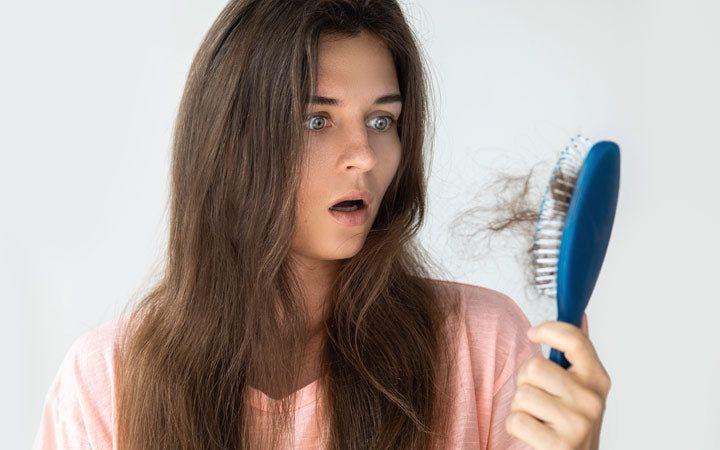
A lot of people believe that hair fall is a curse and a nightmare, so do they struggle to fix it. But the fact is, hair fall is a very common and normal part of the natural hair growth cycle. And it really depends when hair fall becomes a problem.
If you are losing 50-100 hairs a day that is completely normal.
Almost everyone experiences hair fall at some stage with different conditions like stress, illness, diet changes, hormonal shifts, etc., can be considered temporary and can be reversible.
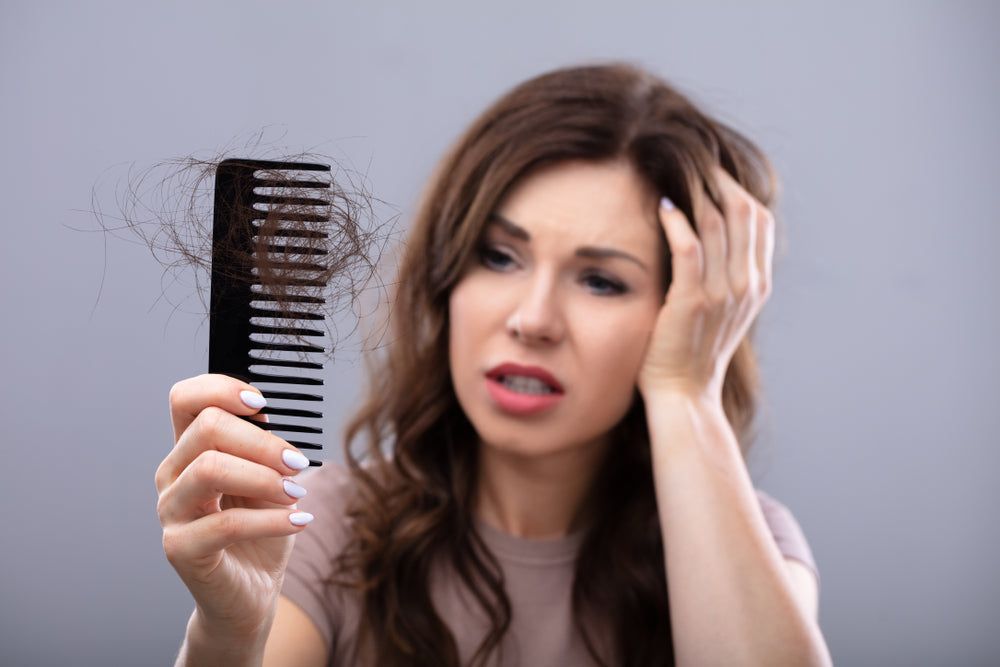
When Does Hair Fall Becomes a Serious Concern?
Hair fall needs attention, if you notice:
- Excessive shedding lasting more then 2-3 months
- Visible thinning, widening part, or bald patches
- Hair fall with itching, scaling, or pain
- Family history of pattern baldness
- Hair fall along with fatigue, anemia, thyroid issues, or hormonal problems
These symptoms should not be taken lightly, as they might be early signs for conditions like androgenetic alopecia, telogen effluvium, alopecia areata or nutritional deficiencies.
Types of Hair Fall
1. Androgenetic Alopecia (Pattern hair loss)
- It is considered to be the most common type of hair fall and it affects both men and women
- Caused by genetics and hormones (DHT)
- Men: Receding hairline, thinning at the crown
- Women: Widening part, overall thinning (rarely complete baldness)
- This condition is progressive, worsens if untreated.
2. Telogen Effluvium (stress-related hair fall)
Mainly triggered by:
- Physical or emotional stress, illness, fever, weight loss, nutritional deficiencies, hormonal changes
- Hair falls from the entire scalp
- This is usually temporary and reversible.
3. Alopecia Areata
- This is actually Autoimmune-related hair loss
- Causes round or oval bald patches
- This can affect scalp, beard, eyebrows
- Usually, hair loss happens suddenly
- In this condition hair may regrow, but can relapse.
4. Traction Alopecia
- Hair fall that occurs by pulling or tension
- Caused by: tight hairstyles, hair extensions or heavy styling
- Hair loss can be seen around hairline and temples
- This can be preventable if caught early
5. Anagen Effluvium
- In this condition, hair fall occurs during the growth phase
- Caused by: Chemotherapy, radiation, toxic exposure, etc.
- Hair falls out quickly and extensively
- Usually reversible after stopping the triggers.
6. Scarring Alopecia (Cicatricial Alopecia)
- This is a condition of permanent hair loss
- Hair follicles are destroyed and replaced by scar tissue
- Caused by: Autoimmune disorders, severe infections, burns or injuries
- Probabilities of hair regrowth is very less; hair does not grow back
- Might needs urgent medical treatment to stop progression.
7. Hair fall due to nutritional deficiencies
This is one of the most overlooked conditions of overall hair fall issue;
Low levels of:
- Iron
- Protein
- Vitamin D
- Vitamin B12
- Zinc
- Causes diffuse thinning and weak hair
- This is very common in young adults and vegetarians.
Key takeaway
Hair fall is not one-size-fits-all. Treating hair fall without knowing the type often leads to wasted time and money.
What Are the Causes of Hair Fall?
As mentioned earlier, hair fall usually isn’t caused by one single reason; It’s often a mix of internal + external factors. But to understand it little better, below is the breakdown of most common causes of hair fall –
1.Genetics & Hormones
- Hair fall can occur due to genetic factors, where an individual inherits sensitivity of hair follicles to hormones such as DHT, leading to gradual thinning and pattern hair loss.
- Hormonal imbalances caused by conditions like PCOS, thyroid disorders, pregnancy, or menopause can disrupt normal hair growth and increase hair shedding.
2. Stress (Physical & Emotional)
- Physical or emotional stress can force a large number of hair follicles into the resting phase, which results in noticeable hair fall after a few months.
- Events such as severe illness, high fever, surgery, accidents, or prolonged mental stress can trigger sudden and excessive hair shedding.
3. Nutritional Deficiencies
- Deficiency of nutrients such as iron, vitamin D, vitamin B12, protein, and zinc can weaken hair follicles and reduce hair growth.
- Inadequate nutrition prevents proper formation of healthy hair strands, making hair thin, fragile, and prone to excessive shedding.
4. Poor Diet & Crash Weight Loss
- Skipping meals or following extreme dieting plans can deprive the body of essential nutrients required for hair growth.
- Rapid weight loss causes the body to redirect nutrients to vital organs, which results in increased hair fall as hair growth becomes a lower priority.
5. Scalp Conditions
- Scalp problems such as dandruff, seborrheic dermatitis, fungal infections, or psoriasis can create inflammation that weakens hair roots.
- An unhealthy scalp environment interferes with hair follicle function and leads to increased hair fall if not treated properly.
- Bonus: Click/Tap here to know how dandruff occurs
6. hair Styling & Chemical Damage
- Frequent use of tight hairstyles like ponytails, braids, or buns can put continuous tension on hair follicles and cause traction-related hair loss.
- Excessive use of heat tools, chemical straightening, coloring, or perming can damage the hair shaft and weaken hair structure.
7. Medical Conditions & Treatments
- Medical conditions such as thyroid disorders, anemia, autoimmune diseases, hormonal imbalances, steroids, antidepressants and blood pressure medicines, can cause hair fall as a secondary symptom and disrupt the hair growth cycle.
- This type of hair fall is often temporary and improves once the medication is stopped or adjusted.
8. Ageing
- As a person ages, hair growth naturally slows down and hair follicles gradually becomes less active.
- This leads to thinner hair strands, reduced hair density, and increased hair shedding over time.
9. Environmental & Lifestyle Factors
- Environmental factors such as pollution and hard water can damage the scalp and weakens hair strands.
- Lifestyle habits like smoking, irregular sleep patterns, and lack of physical activity can further worsen hair fall and overall hair health.
Key takeaway
Hair fall is common, treatable, and often reversible. If the root cause is identified early.
Is Beauty Industry Misusing the Condition of Hair Fall?
The beauty industry often exaggerates hair fall to sell their products using different tricks like –
- Often marketing normal hair fall as a disease.
- Claiming one product can solve the complete problem (Whereas, hair fall doesn’t occur by just one reason).
- Temporary results are sold as permanent solutions.
- Overuse of fear-based advertising (Phrases like “act before it’s too late” etc.,)
- Oversimplifying serious underlying medical conditions.
- Endorsements from influencer and celebrity which blurs the reality and real cause.
Is Hair Fall in Teenagers a Big Concern?
Short answer – Yes!
Research and clinical observations suggest that a meaningful number of teenagers experience noticeable hair loss, with some studies indicating that around 10-25% of adolescents show signs of hair shedding or thinning beyond the normal range.
In teenage boys, early pattern hair loss (androgenetic alopecia) can begin by the mid to late teens.
While girls may show diffuse shedding linked to diet, hormones, or stress.
Causes here cannot be differentiated much, while primary internal and external causes might be one of the contributors in teenagers too.
However, avoiding excess processed food or following fad diets would help in measuring the conditions.
Does Major Metro Cities Play an Important Role in Hair Fall?
Yes! Major metro cities do play an important role in increasing the risk and visibility of hair fall, but they are contributing factors, not the sole cause.
According to a Mediabrief report, a large data analysis of 4,00,000+ Indians found that several major metro cities show significantly elevated stress levels, which is a key driver of hair fall, especially among both men and women:
- Hyderabad shows high stress in males and females.
- Bengaluru also has high stress levels across genders.
- Kolkata reports elevated stress-linked shedding for women compared to men.
These results suggest that urban stress patterns associated with metro lifestyles are correlated with more frequent hair loss triggers in these cities.
Treatments for Hair Fall
Hair fall treatment broadly falls into two categories: natural approaches that support hair health and medical treatments that address specific underlying causes. Both have their place, depending on the type and severity of hair fall.
Natural Treatments for Hair Fall
Natural treatments focus on supporting the scalp, improving nutrition and correcting lifestyle factors. They work best for mild, stress-related, or temporary hair fall.
Proper Nutrition:
Plays a crucial role in hair health, as adequate intake of protein, iron, vitamins, and minerals provides the building blocks required for hair growth.
Stress Management:
Through adequate sleep, exercise, meditation, or relaxation techniques helps regulate hormones that influence the hair growth cycle.
Scalp Care and Hygiene:
Improve blood circulation to hair follicles and prevent buildup of dirt, oil, and dandruff that can weaken hair roots.
Natural Oils and Scalp Massages:
Can help maintain scalp moisture, improve circulation, and reduce hair breakage, although they do not cure genetic or hormonal hair loss.
Avoiding harsh styling practices:
Such as excessive heat, tight hairstyles, and frequent chemical treatments helps reduce mechanical damage to hair strands.
Fruits like, amla (Indian Gooseberry), papaya, oranges & citrus fruits, Berries (strawberry, blueberry), and banana can help in moderate the condition, as they are rich in vitamins.
What we also have to keep in mind is, natural treatments are safe and supportive, but they require consistency and cannot reverse genetic or advanced hair loss on their own.
Medical Treatments for Hair Fall
Medical treatments are designed to target specific causes of hair fall and are often necessary for moderate to severe or long-standing conditions.
1. Treatments Acting on the Anagen (Growth) Phase
Minoxidil
Primary role: Anagen phase prolongation; which increases scalp blood flow and enhances delivery of oxygen and nutrients to hair follicles.
Medical outcome: Extends the anagen phase and increase hair shaft diameter.
2. Treatments Acting on Hormonal Pathways (DHT suppression)
Finasteride / Dutasteride
Primary role: Hormonal modulation, reduced DHT slows follicle shrinkage and preserves existing hair.
Medical outcome: Prevents progression of androgenetic alopecia by protecting follicles from hormonal damage.
3. Treatments Targeting the Telogen (Shedding) Phase
Iron, Vitamin D, Zinc, Biotin (when deficient)
Primary role: prevent premature telogen entry.
Medical outcome: Reduces excessive shedding by restoring normal follicular cycling.
4. Immune-Modulating Treatments (Autoimmune Hair Loss)
Corticosteroids (Topical/Intralesional)
Primary role: Immune suppression; suppress T-cell mediated inflammation around hair follicles.
Medical outcome: Allows follicles to re-enter the anagen phase.
5. Regenerative & Growth Factor-Based Treatments
Platelet-Rich Plasma (PRP)
Primary role: Cellular stimulation; Stimulates follicular stem cells, angiogenesis, hair matrix cell proliferation.
Medical outcome: Improves follicle strength, thickness, and density.
6. Follicular Activation via Controlled Injury
Microneedling
Primary role: Wound-healing cascade activation; Creates micro-injuries that activate platelet signaling pathways.
Medical outcome: Enhances response to minoxidil and PRP
7. Treatments Acting on Scalp Environment
Antifungal Agents (Ketoconazole)
Primary role: Scalp inflammation control; Has mild anti-androgenic effects.
Medical outcome: Reduces inflammatory hair fall and improves treatment response.
8. Surgical Treatment (Follicle Redistribution)
Hair transplantation
Primary role: Anatomical correction; Transfers DHT-resistant follicles from donor areas.
Medical outcome: Permanent restoration in scarred or miniaturized areas.
Hair fall treatments work by modifying follicular biology, hormonal pathways, immune responses, or growth factor signaling, depending on the underlying cause and hair cycle phase involved.
Conclusion
1. Hair fall is a common and natural issue, but it becomes a concern when it is excessive, long-lasting, or progressive.
2. It can happen due to genetics, stress, poor nutrition, medical conditions, lifestyle habits, and environmental factors, which are more commonly seen in urban and metro city life.
3. Not all hair fall is the same. Some types are temporary and reversible, while others are long-term and need medical attention.
4. As beauty industry claims that one product or solution can fix the issue; it is not always true and does not work for everyone.
5. Natural care such as a healthy diet, stress control, proper sleep, and gentle hair practices helps support hair health, especially in mild cases.
6. Medical treatments are needed when hair fall is persistent, genetic, or linked to hormonal or medical causes, and they work by protecting existing hair and supporting healthy hair growth.
7. The most important step is to understanding the cause early, instead of panicking or relying on fear-based products. With the right approach, most hair fall can be controlled, managed, or slowed effectively.
I understand having an issue like this can be overwhelming and might affect self-esteem, but finding the mindful premeasured solutions can be more helpful to fight the condition with utmost courage and clarity.
Do let me know what is your main root cause for this issue and how are you planning to fight this?
Leave a Reply