
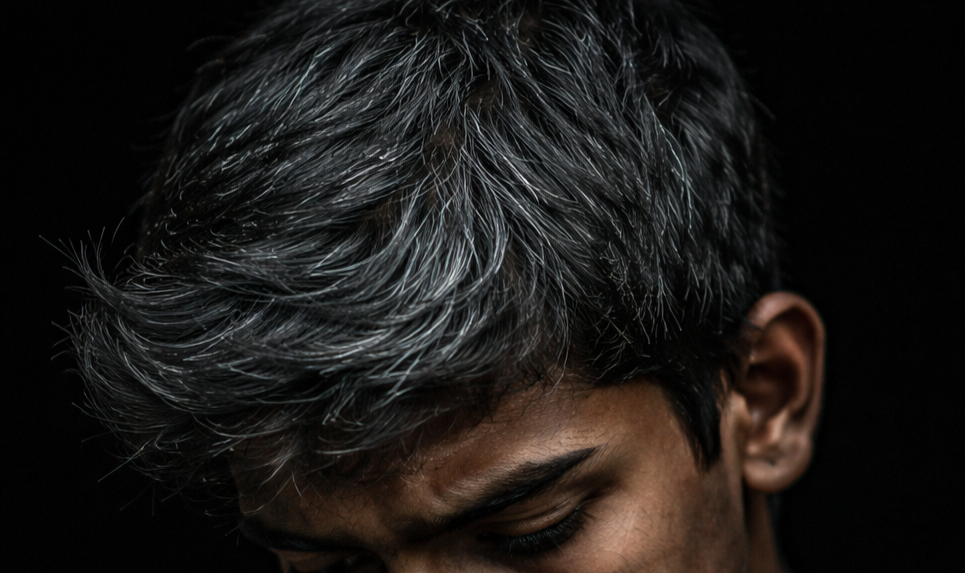
In most cases, premature greying is not a serious issue. It does not cause illness, organ damage, or reduced life expectancy. However, people with early greying are otherwise completely healthy.
But in certain situations, premature greying can indicate an underlying medical or nutritional problem that does need attention.
What is premature greying of hair means?
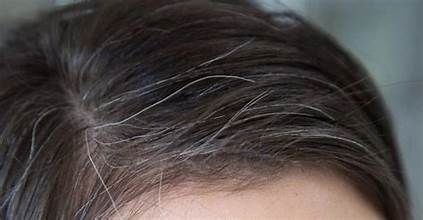
Premature greying of hair is the process of greying of hair where the hair in the young individual starts to turn grey or white earlier than the expected age.
It might affect self-esteem, but some causes at this instance could be potential factors like — Genetics, Oxidative stress, Nutritional deficiencies, Hormonal and Medical conditions, Stress and Lifestyle.
How actually this process of premature greying of hair works?
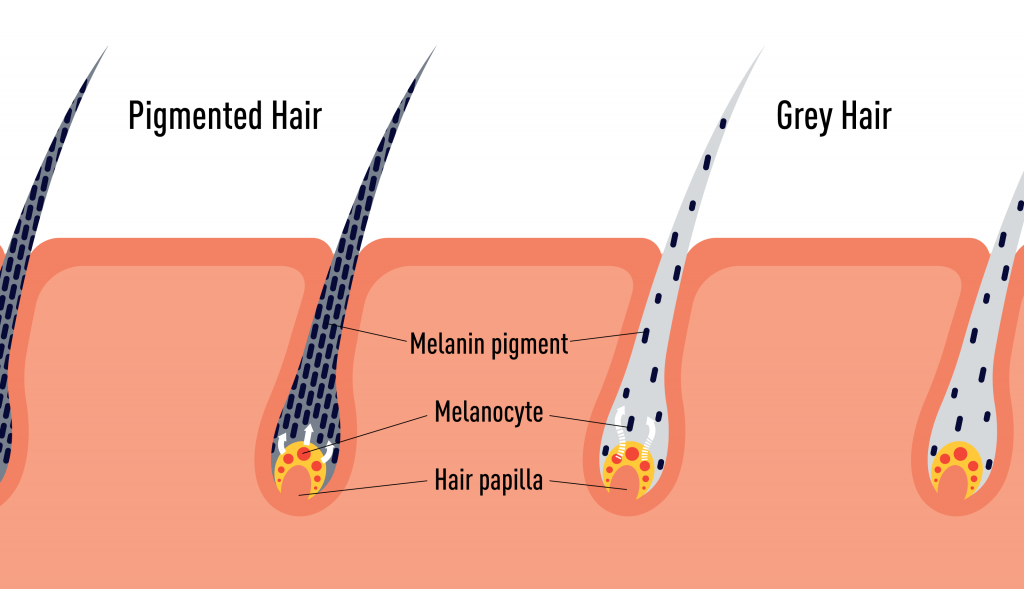
Inside every hair follicle, there is a pigment unit made of Melanocytes (melanin-producing cells) and Keratinocytes (hair-forming cells).
During the anagen (growth) phase, melanocytes synthesize melanin inside melanosomes and this melanin is transferred into keratinocytes.
The hair shaft grows out with color embedded inside it. As long as this cycle repeats normally, hair retains its color.
But what goes wrong in premature greying?
Here it incorporates the same cycle, but melanocytes stop producing melanin, though the melanocytes still exist their enzyme activity, especially tyrosinase drops.
Oxidative damage interferes with melanin synthesis and hydrogen peroxide accumulates inside the follicles.
And this results hair growth but without pigment, hence hair appears grey.
This stage can be slowed if the cause is irreversible.
External factors that cause melanocytes stops producing melanin:
- Chronic psychological stress – increases oxidative stress in hair follicles
- Smoking – introduces free radicals that damage melanocytes
- Air pollution – oxidative damage and inflammation around follicles
- UV radiation (excess sun exposure) – damages melanocyte DNA
- Poor diet / nutrient-poor food – lacks copper, B12, iron needed for melanin
- Harsh hair chemicals (frequent hair dyes, bleaching, straightening agents) – follicular toxicity
- Scalp inflammation (dandruff, dermatitis, infections) – disrupts melanocyte function
- Sleep deprivation – weakens cellular repair and antioxidant systems
What are the causes of premature greying?
It is basically a multifactorial issue, mainly concludes reasons like genetics, biological & medical, lifestyle & environmental, external scalp-related causes.
a. One of the most primary yet important causes can be genetics.
Basically, genetically transmitted, follows if parents or close relatives have the issue of the greying.
b. Conditions like oxidative stress, smoking, pollution, etc.,
cause damage as it’s excess free radicals will damage melanocytes. In which…
The most strongly linked nutrition like vitamin B12 and others as iron, zinc, copper (essential for melanin synthesis), folate., deficiencies also play an important role causing greying.
Hormonal disorders like Thyroid dysfunction (hypo / hyperthyroidism) and other rare endocrine disorders constitutes a major role.
Unfortunate conditions like autoimmune diseases, which can mistakenly attack and damage body’s own cells. Disorder like Vitiligo directly destroys melanocytes and disrupts the process of melanin production.
c. Chronic psychological stress increase cortisol and oxidative stress,
which will disrupt hair growth and pigment cycles.
Studies have found that consumption of tobacco & smoking has strong association with early greying, which cause vascular and oxidative damage.
Urbanization or environmental pollution contains heavy metals and toxins which affect hair follicles.
Poor sleep & irregular routine can impact a cause where it weakens cellular repair and antioxidant defenses.
d. Excessive chemical exposure like frequent hair dyes, bleaching and straightening agents, harsh shampoos and treatments
As they contain hazardous chemicals like Ammonia, Hydrogen peroxide, Sodium lauryl sulfate (SLS), Parabens, etc., which can increase oxidative stress, damage melanocyte DNA, trigger scalp inflammation, disrupt follicle signaling, exhaust melanocyte stem cells faster.
Tip: Learn more about how similarly dandruff occurs constituting above causes
Greying of hair in kids
Premature greying of hair in children is uncommon. But when it occurs, it deserves proper attention. In kids, grey hair is more likely to be linked to an underlying cause than in adults.
Especially kids of <10 years old must be taken care to avoid future health consequences.
Even though we witness the similar pattern as in adults, but still, there is need of parents / guardian’s intervention to make sure kids health must be taken care
One of the most common causes would be genetics, if family history had issue of greying hair, it’s a general thing and not to be seriously bothered about.
And also, beliefs like plucking hair, oil application, washing hair frequently and normal school stress, etc., are just some complete misconceptions and not to worry or relate with greying of hair. They are MYTHS.
When parents should be concerned:
Medical evaluation is advised if:
- Greying starts very early (under 10 years)
- Grey hair is increasing rapidly
- There is no family history
- Child shows other symptoms (fatigue, poor growth, skin patches)
Can greying in kids be reversed?
- Nutritional causes – often partially reversible
- Hormonal causes – improves after treatment
- Genetic causes – not reversible, but progression may slow
Treatments for premature greying
We can probably find solutions/treatments in two different categories which can be 1. Medical solutions and 2. Natural approach., while both plays important role, it’s good if we can fix and maintain our life by natural approach to avoid medical solution with bad conditions.
Natural treatment
1. Diet correction (strongest natural approach)
Focus on:
- B12-rich foods (eggs, dairy, fortified foods)
- Iron sources (leafy greens, legumes)
- Copper (nuts, seeds)
- Antioxidants (fruits, vegetables)
These can help slow progression if issue is deficiency-related.
2. Ayurvedic and traditional herbs
Commonly used:
- Amla (Indian gooseberry) – antioxidant support
- Bhringraj – supports follicle health
- Curry leaves – micronutrients
- Black sesame seeds
These have limited scientific evidence, but they may support scalp health.
3. Natural oils (supportive only)
- Coconut oil
- Castor oil
- Sesame oil
Thus, they do not help restart melanocytes, however improves scalp environment.
4. Stress reduction
- Sleep hygiene
- Meditation
- Physical activity
These activities will reduce oxidative stress and may slow down the progression of greying.
5. Avoid damage
- Reduce chemical treatments
- Avoid frequent bleaching
- Use mild Shampoos
- Protect scalp from excessive sun
These can help you much better from getting things worse, if treated reasonably.
Medical treatments
1. Treat the underlying cause
You cannot directly treat the premature greying itself. But, can start with premeasures of causes –
Doctors may correct:
- Vitamin B12 deficiency
- Iron, copper, zinc deficiency
- Thyroid disorders
- Autoimmune conditions
These can slow progression and sometimes partially restore pigment if follicles are still functional.
2. Nutritional supplementation
Commonly supplements prescribed:
- Vitamin B12
- Iron (if low)
- Copper
- Zinc
- Folate
- Antioxidants (Vitamin C, E)
Blind supplementation without testing is not advised.
3. Topical medical treatments (limited success)
- Topical antioxidants
- Peptides and growth-factor serums
These may support follicle health but do not reliable reverse grey hair.
4. Emerging / experimental options (not standard yet)
- Melanocyte-stimulating peptides
- Stem cell-targeted therapies
- Wnt-signaling modulators
These are still research-level, not routine treatments.
5. Cosmetic medical solutions
- Dermatologist-approved hair dyes
- Low-PPD or PPD-free formulations
This is concealment, not treatment.
| QUICK SUMMARY OF TREATMENTS | |
| Approach | What it does |
| Medical | Identifies and corrects causes |
| Natural | supports follicle health |
| Cosmetic | Covers grey hair |
| Myths | Waste time & money |
Conclusion
Here we conclude 9 major elements to know and control premature greying –
Premature greying of hair is not merely a cosmetic concern but a multifactorial biological process rooted in the early failure of melanin production within the hair follicle.
Hair color depends on melanocytes and their stem cells; when these cells are damaged, exhausted, or biochemically blocked, hair continues to grow but without pigment.
Genetics plays the strongest role in determining onset, while oxidative stress acts as the main character.
External factors such as chronic stress, smoking, pollution, nutritional deficiencies, harsh chemicals, and scalp inflammation further weaken melanocyte function.
In some cases, premature greying can signal underlying conditions, including vitamin B12 deficiency, thyroid disorders, or autoimmune diseases like vitiligo and pernicious anemia.
In children, greying deserves special attention, as it is more often linked to nutritional or hormonal imbalances than to aging.
While the complete reversal of established grey hair is rare > especially when melanocyte stem cells are depleted > early identification of reversible causes can slow progression and occasionally restore pigmentation.
Treatments focus on correcting deficiencies, managing medical conditions, reducing oxidative stress, and protecting scalp health.
Ultimately, understanding premature greying requires moving beyond myths toward science-based prevention, realistic expectations, and overall health awareness, recognizing grey hair as a visible marker of biological processes rather than a standalone problem.
And if you’re going through this condition of premature greying, then what do you think triggered it – genetics, stress, lifestyle or something else?
Leave a Reply